



Financial Industry UE/UI Full-Link Solutions - Driving Business Growth through Experience Innovation
In the deep-water zone of digital transformation in the financial industry, User Experience (UE) and User Interface (UI) design are no longer "add-ons" but core elements determining product competitiveness. The operational complexity of segmented sectors such as banking, finance, fund management, and insurance often leads to bloated system pages, cumbersome processes, and high user operation thresholds, which not only affect operational efficiency but also erode users' trust in the brand.
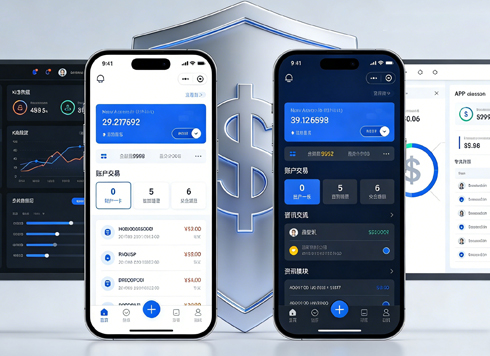
Based on a decade of experience serving the financial industry, Xiyue Design adheres to the core philosophy of "Leading with Advanced Processes, Staying One Step Ahead in Products". Through in-depth user research, systematic interaction optimization, brand-oriented visual upgrading, and standardized implementation assurance, we provide financial institutions with full-link UE/UI solutions ranging from demand discovery to specification reuse. These solutions make systems both "user-friendly" and "professional", helping to enhance business value.
I. Insight into Core Pain Points: Experience Bottlenecks of Financial Systems
The rigor and complexity of financial businesses result in a constant contradiction between "function stacking" and "experience imbalance" in system design. Combining practical scenarios across various financial institutions, the core pain points can be summarized into five categories:
1. Chaotic Information and Process Obstruction
Pages carry excessive business data, burying key information under redundant content; cross-link processes lack disassembly, and long tasks have no anchor guidance, causing users to easily lose their operational path. This leads to significant efficiency loss, especially in high-frequency scenarios such as report filling and fund redemption.
2. Lack of Guidance and Ambiguous Positioning
Function entrances are deeply hidden, and new users have no homepage guidance process; operational steps lack movement cues, and the current location status is not prominent, making it difficult for users to complete businesses coherently. For example, in insurance claim applications, the problem of "not knowing where to operate next" frequently occurs.
3. Invalid Homepage and Disconnected Operations
Most system homepages only serve as "function lists", failing to integrate core business data and pending tasks, and cannot act as the "starting point for operations"; users need to switch repeatedly between multiple subsystems and cannot intuitively obtain a global business view, which violates the demand for "one-stop office".
4. Chaotic Configuration and Habit Conflicts
The boundary between system configuration and backend configuration is vague, and the operational logic is chaotic; icon design has low recognition, leading to easy misoperation, and status prompts are weak; lists display redundant information resulting in horizontal scrolling, and lack user-friendly functions such as step saving and direct page editing, increasing the rate of operational errors.
5. Design Discontinuity and Reuse Difficulties
The lack of a unified UI design system leads to low product recognition; basic components such as tables and forms have monotonous visuals that do not meet mainstream aesthetics; design specifications are difficult to extend to multiple subsystems, leading to style deviations in subsequent development and making it hard to ensure the design remains up-to-date in the long term.
II. Core Value Proposition: From "Functionally Usable" to "Optimal Experience"
Xiyue Design's solutions are not simply about "beautifying interfaces", but centered on users, achieving three core values through "process reconstruction + experience upgrading + specification implementation":
- Efficiency Improvement: Through global navigation, quick entrances, and process optimization, reduce invalid operations and shorten business processing time by more than 30%; the WYSIWYG (What You See Is What You Get) editing mode makes data processing more direct and efficient.
- Risk Reduction: Strengthen operational prompts, status feedback, and permission control to reduce filling errors, process omissions and other issues caused by ambiguous interfaces, lowering business risks.
- Brand Enhancement: Integrate brand genes into visual design to form a unified and unique design language, enhance users' recognition and identification of products, and help upgrade brand image.
Ultimately achieving "three transformations": from a single handling tool to a one-stop business workstation, from a data browsing mode to an instant editing mode, and from isolated record submission to an integrated business space.
III. Core Path of Solutions: Four Steps to Build a High-Quality Experience System
The solution takes "user research as the starting point and specification reuse as the end point", forming a closed-loop design service through four modules: user research, interaction optimization, visual upgrading, and specification implementation.
1. In-Depth User Research: Aligning Design with Real Business Scenarios
Experience optimization of financial systems must be based on accurate grasp of business logic and user habits. We explore core needs through the research method of "role substitution + scenario disassembly + problem focusing":
- Preparations: Familiarize with system architecture and business processes, sort out interview outlines, and confirm invitees (covering internal operators, reviewers, and external end users such as banks and funds).
- Multi-Dimensional Research: Conduct one-on-one interviews and role-based workshops, focusing on three core issues: "commonly used functions and their importance", "existing pain points", and "operational difficulties and suggestions" to collect real feedback.
- Problem Precipitation: Formulate the "User Research Problem List", "System Existing Problem List", and "User Research Report", distinguish common and individual problems, and provide data support for subsequent design.
2. Interaction Optimization: Aligning Processes with User Habits
Guided by user research results, reconstruct interaction logic from four dimensions: "information architecture - homepage design - process optimization - guidance design":
- Architecture Integration: Sort out functions of multiple subsystems, establish a consistent global menu navigation, and add cross-system global search functions to solve the problem of cumbersome subsystem switching.
- Homepage Reconstruction: Create a "global command center" style homepage, integrating daily task summaries, quick entrances for high-frequency operations, and business data overview, allowing users to have a clear view and quickly access core businesses.
- Process Simplification: For long forms and multiple pop-up windows, adopt strategies such as "step-by-step filling + progress prompts" and "pop-up level merging + key information highlighting"; for complex task scenarios, subversively optimize layout and processes to improve operational fluency.
- Guidance Enhancement: Add homepage guidance, operational step prompts, and current location identification to solve the problems of users "not knowing how to operate" and "not knowing where they are".
Ultimately output the "Requirements Analysis Document", "Key Node Interaction Design Drawings", "Full-Process Interactive Prototypes", and iterate and optimize through user testing to form a confirmation letter.
3. UI Visual Upgrading: Making Interfaces Both Professional and Branded
Combining the characteristics of the financial industry (rigorous, professional, technological), create a visual system of "simple and modern + brand identification + flexible adaptation":
- Style Positioning: Adopt low-saturation colors, clear lines, and minimalist icons to convey a professional and reliable temperament; integrate corporate brand colors and visual elements to form a unique design language and enhance recognition.
- Specification Establishment: Formulate a complete UI design specification covering all elements such as fonts, colors, components, and icons to ensure visual consistency across multiple subsystems; support international design specifications to adapt to global business needs.
- Detail Optimization: For dense tables and forms, improve readability by distinguishing headers from content with colors, increasing row height and spacing, and optimizing filtering interactions; adopt card-based design to present information in blocks and highlight key points.
- Flexible Adaptation: Adopt responsive layout to meet the needs of devices with different resolutions, especially adapting to commonly used office equipment such as portable laptops to solve the problem of page congestion.
Output a full set of visual design drafts and confirmation letters to ensure high alignment between vision and interaction logic.
4. Specification Reuse: Enabling Long-Term Precipitation of Design Value
To avoid the problem of "one set for design, one set for development, and chaos in follow-up", establish a long-term reuse mechanism:
- Asset Precipitation: Encapsulate design components and styles into a reusable resource library, and simultaneously establish a front-end component code library and theme library to achieve seamless connection between "design and development".
- Method Transfer: Output methodologies for optimizing user experience to help internal enterprise teams master design logic and carry out independent iterations in the follow-up.
- Long-Term Assurance: Based on industry trend prediction, ensure that the design style remains mainstream in the market for about 5 years, reducing the cost of repeated revisions.
IV. Phased Implementation Path: Full-Process Control from Initiation to Implementation
|
Phase |
Core Objective |
Key Tasks |
Deliverables |
|---|---|---|---|
|
Preparation Phase |
Eliminate unfamiliarity and locate core problems |
Familiarize with system architecture, sort out business processes, and determine user research plan |
User research plan, interview outline |
|
User Research & Interaction Phase |
Align cognition and output interaction solutions |
Conduct user research, cross-verify problems, design interactive prototypes and test iterations |
User research report, interaction design drafts and confirmation letter |
|
Visual Design Phase |
Implement visual solutions and strengthen brand identification |
Determine visual style, formulate design specifications, complete visual draft design and confirmation |
UI design specifications, visual drafts and confirmation letter |
|
Development & Delivery Phase |
Restore design effects and realize function implementation |
Front-end technology selection, design draft restoration, joint debugging and testing, component library delivery |
Software code, component library, front-end development confirmation letter |
V. Full-Cycle Collaboration Mechanism: Ensuring Efficient Project Advancement
- Research and Interview Collaboration: Conducted in accordance with the research plan, with participants including Xiyue Design and interviewees, communicating core needs and outputting interview minutes and research summaries.
- Weekly Project Meetings: Hosted by the person in charge of both parties' project teams every Tuesday, synchronizing work progress, discussing design solutions, coordinating resources, formulating risk contingency plans, and outputting project weekly reports including interface and interaction design displays.
- Node Review Meetings: Organize both parties' project teams to conduct reviews and effect inspections at key nodes such as interaction design, UI design, and development, outputting review results and revision opinions.
VI. Core Highlights of the Solution: Ten Advantages Building Competitive Barriers
1. A Decade of Financial Accumulation, Understanding Both Business and Users
Serving multiple banks, funds, and insurance institutions, we have formed a proven advanced methodology through industry workshops and research on internationally leading products, which can accurately integrate system architecture and optimize core business processes.
2. Professional User Research Methods to Explore Real Demands
Focusing on "business scenarios + user roles", distinguish the needs of different roles such as operators and reviewers through interviews, workshops, etc., to ensure that the design aligns with real workflows.
3. Participation of Typical Users to Co-Create Optimal Solutions
Invite internal business experts and external end users to discuss in real roles to ensure that the design covers typical problems and core needs, avoiding "closed-door design".
4. Full-Process Prototype Innovation to Reconstruct Complex Scenarios
For key complex tasks, combine user pain points and business understanding to subversively optimize layout and processes, innovate interaction methods, and greatly improve operational efficiency.
5. Management Cockpit Design for Clear Global Status
Build a global homepage with a dashboard, integrating business data, daily tasks, and subsystem entrances; support custom configuration of charts to help managers quickly grasp business dynamics and adjust strategies in a timely manner.
6. Micro-Animation Folding and Storage to Optimize Space Utilization
Solve the problem of page congestion through information hierarchy division and "fold-unfold" interaction, realizing efficient transmission of key information in limited space.
7. Multi-Dimensional Table Upgrading for Intuitive Data Presentation
Realize WYSIWYG editing of tables, support header filtering, nested structures, advanced filtering and other functions, breaking the monotonous mode of traditional tables and making data transmission more vivid.
8. Card-Based Design for Efficient Information Transmission
Use cards to carry information in blocks, highlight "application identification - core functions", and enable users to quickly locate needs and reduce information search costs through clear hierarchy and interactive design.
9. Form Optimization Balancing Efficiency and Accuracy
Reduce users' input burden and improve form filling efficiency and accuracy through reasonable layout, component optimization, and real-time prompts, meeting the high requirements of financial businesses for data accuracy.
10. Emotional Guidance to Enhance Operational Experience
Strengthen global and subsystem homepage guidance, operational prompts, and status feedback to reduce operational errors; convey humanistic care through detailed design and enhance users' favorability towards products.
VII. Conclusion
The core of UE/UI design in the financial industry is to "balance business complexity and user-friendliness". Centered on users, Xiyue Design, combining a decade of industry experience and professional design capabilities, provides financial institutions with a system experience that is "smooth in processes, beautiful in interfaces, easy to reuse, and long-term effective" through full-link services from research to implementation. This helps products move from "functionally usable" to "excellent experience", ultimately achieving business growth and brand value enhancement.